By Yosef Golowa, MD, FSIR · Published August 10, 2026 · 5 min read
Fibroids are extremely common. Most women who have them never need treatment. But for those with heavy bleeding, pelvic pressure, or pain severe enough to organize a life around, the question becomes what to do about it, and the first thing many women are offered is a hysterectomy.
It is a definitive operation, and for some women it is genuinely the right answer. It is rarely the only answer. This article sets out how the main options compare, including uterine fibroid embolization (UFE), and is honest about where each one falls short.
What fibroids actually do
Fibroids are benign growths in the muscular wall of the uterus. Depending on their size and position they cause heavy or prolonged periods, anemia and the fatigue that comes with it, pelvic pressure or a feeling of fullness, pain during sex, frequent urination when a fibroid presses on the bladder, constipation when one presses backward, and an abdomen that looks distended.
What matters for treatment is not the number of fibroids on a scan. It is which symptoms are affecting your life, and how much.
The realistic options
Watchful waiting. If symptoms are mild, doing nothing is legitimate. Fibroids often shrink after menopause.
Medication. Hormonal treatments, a hormonal IUD, or tranexamic acid can control bleeding for some women. They manage symptoms rather than treat the fibroids, and symptoms usually return when the medication stops.
Myomectomy. Surgical removal of individual fibroids while leaving the uterus in place. It is the established choice for women who want to conceive, particularly with a small number of accessible fibroids. It is still surgery, with a longer recovery, and fibroids can regrow.
Uterine fibroid embolization. A minimally invasive procedure that blocks the arteries feeding the fibroids, so they shrink. No incision, no removal of tissue, and the uterus stays.
Hysterectomy. Removal of the uterus. It is the only option that guarantees fibroids can never come back, because the organ they grow in is gone. It is also major surgery and it is irreversible.
How embolization works
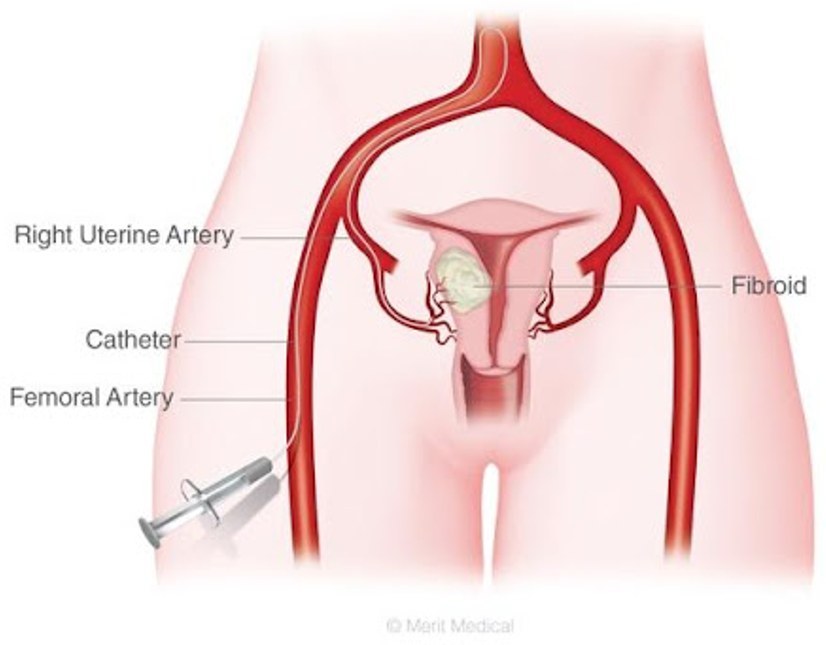
An interventional radiologist passes a fine catheter from an artery at the top of the thigh into the uterine arteries, guided by X-ray. Tiny particles are released into the vessels feeding the fibroids, cutting off their blood supply. Deprived of oxygen and nutrients, the fibroids soften and shrink over the following months. The healthy uterus continues to receive blood from other vessels.
The procedure takes under an hour, uses a needle puncture rather than an incision, and you go home the same day. The full detail is on the treatment page.
Comparing the two directly
Recovery. This is the starkest difference. After UFE most women are back to normal activity within one to two weeks, with cramping in the first few days that feels like a heavy period. After an abdominal hysterectomy, recovery typically runs six weeks or more, with lifting restrictions throughout.
Symptom relief. Both work. Around 85 to 90% of women report significant improvement in bleeding and pressure symptoms after UFE. Hysterectomy resolves fibroid symptoms completely, by definition.
Durability, stated honestly. This is where UFE has a real limitation, and any page that omits it is selling rather than informing. In the EMMY trial, the longest randomized follow-up available, about a third of women who had UFE had gone on to have a hysterectomy within ten years for returning symptoms. Two thirds had not. That is the trade-off: UFE avoids major surgery now, with a meaningful chance of needing further treatment later.
Keeping your uterus. For some women this is a medical question about future pregnancy. For others it matters in itself, and that is a legitimate reason to prefer a uterus-sparing option.
Hormones and menopause. Hysterectomy without removal of the ovaries does not cause immediate menopause, though some evidence suggests it may bring it forward. UFE does not remove anything, but it can occasionally affect ovarian function, most often in women already close to menopause.
Fertility, which deserves care
If you are hoping to conceive, this is the part to discuss in detail with someone who treats fibroids regularly.
Hysterectomy ends fertility permanently. Myomectomy is generally considered the preferred option for women actively trying to conceive, particularly when the fibroids are few and well positioned.
UFE preserves the uterus, and pregnancy after UFE is well documented. Pooled analyses report pregnancy in roughly 40 to 50% of women who wanted to conceive afterward, with better rates in younger women. But the evidence base comparing UFE with myomectomy for fertility specifically is not strong enough to call it settled, which is why the honest position is that UFE is not the automatic first choice if pregnancy is your immediate goal, and that the decision depends on your age, your fibroids, and what else is going on.
Who UFE tends to suit
- Women with symptomatic fibroids who want to avoid major surgery.
- Women who want to keep their uterus, for whatever reason.
- Women who cannot take weeks away from work or family for recovery.
- Women who are poor surgical candidates because of other health conditions.
- Women with multiple fibroids, where removing them individually would be difficult.
When it is not the right answer
If your bleeding is caused by something other than fibroids, embolization will not fix it, which is why imaging comes first. If there is any suspicion of a malignancy, that has to be resolved before anything else. And if you have completed your family, have severe symptoms, and want the certainty that the problem is dealt with once, hysterectomy is a reasonable and rational choice. The point is not that surgery is wrong. It is that it should be a decision rather than a default.
Questions worth asking
- What are my fibroids actually causing, and which symptom are we treating?
- Am I a candidate for embolization, and if not, why not?
- What is the recovery for each option, realistically?
- How does each option affect my chances if I want a pregnancy?
- What happens if symptoms come back?
If a hysterectomy has been proposed and no one has mentioned the alternatives, it is entirely reasonable to ask for a second opinion. A consultation costs you an afternoon.
To find out whether you are a candidate for uterine fibroid embolization, call our office at (212) 991-9991 or book an appointment with Dr. Golowa.