By Yosef Golowa, MD, FSIR · Published August 5, 2026 · 3 min read
It is a specific and frustrating experience: you are fine, you change position, and the erection fades. Men rarely mention it, partly because it sounds too particular to be a real medical pattern. It is one, and it has a name. Position-dependent erectile dysfunction is often the clearest sign that the underlying problem is a venous leak.
What position-dependent ED is
Erectile dysfunction is common, affecting millions of men, and it simply means difficulty getting or keeping an erection firm enough for satisfying sex. What distinguishes the position-dependent form is that firmness changes with body position, rather than being consistently poor.
The usual cause is venous leakage. When you get an erection, blood flows into the penis and is trapped there, which is what makes it rigid. In a venous leak the blood escapes too quickly, like a tap that will not hold water, and certain positions make that escape worse by changing the pressure on the veins.
Why venous leakage happens
- How you are built. Some men have blood vessel differences from birth that affect how blood is held.
- Underlying health conditions. Diabetes and cardiovascular disease damage blood vessels over time, making leakage more likely.
- Injury. Trauma to the penis, whether from vigorous sex, an accident, or surgery, can play a role.
- Age. Tissue loses elasticity as we get older, which makes blood harder to trap.
Signs that point to this pattern
- You lose the erection when you switch position during sex.
- You can get an erection, but it does not last.
- Your morning erections are weak or absent.
- Your sex drive is normal, and the problem is clearly physical rather than one of desire.
That last point matters. Men often assume ED means something has gone wrong with their interest or their relationship. When desire is intact and the mechanics are not, that is a vascular problem, and vascular problems can be treated.
What you can do about it
Start with a proper diagnosis. A physician can establish the underlying cause and recommend treatment on that basis. Depending on what is found, the options include:
- Medication. Common ED medications such as Viagra, Cialis, and Stendra improve blood flow into the penis, and they help some men with this pattern.
- Injections or suppositories. If tablets do not work, these are the next step to explore.
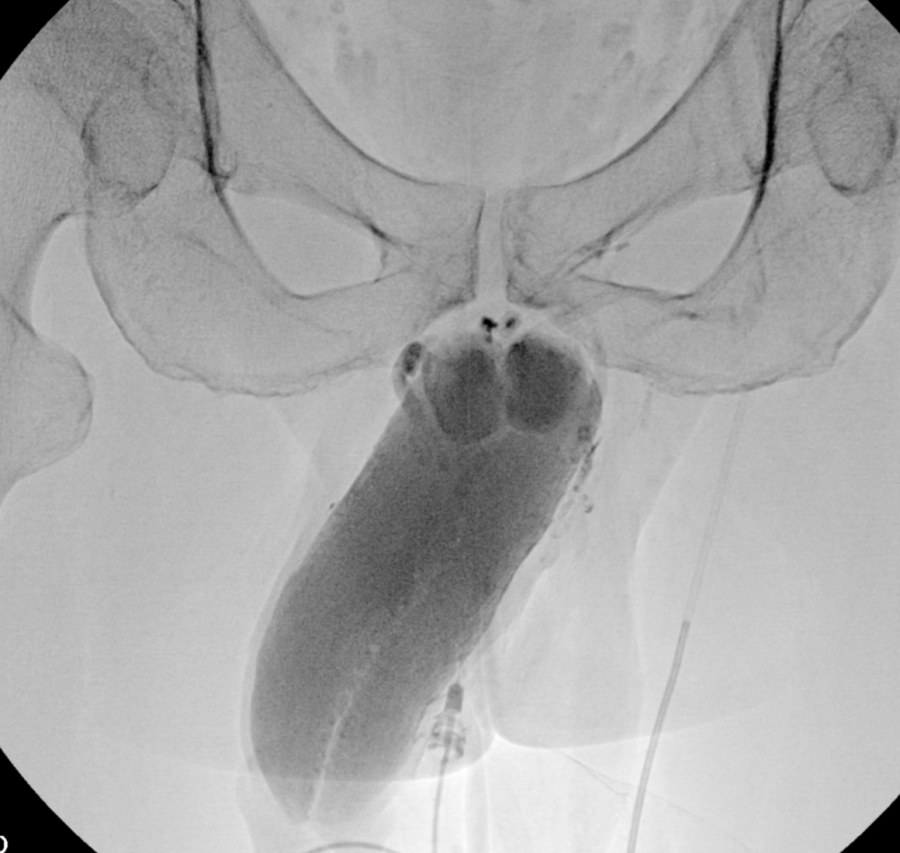
- Venous leak embolization. A minimally invasive procedure that closes the leaking veins directly. It is worth considering when medication has not helped, and it is described in full on the treatment page.
- Vacuum device or constriction ring. These trap blood in the penis mechanically and can maintain an erection without addressing the leak itself.
The full range of options, including what you can change yourself, is set out in venous leak treatment options.
Address your vascular health. Eating well, exercising, managing stress, and stopping smoking all improve circulation, and circulation is what erections depend on. These changes support every other treatment on the list.
Work around it in the meantime. If particular positions reliably cause the problem, avoiding them is a reasonable short-term measure while you pursue a diagnosis. It is not a fix, but it takes some pressure off.
The bottom line
Position-dependent ED is frustrating, and it is treatable. The pattern itself is useful information: it points toward a specific, identifiable cause rather than a vague one, and that makes it far easier to do something about. The men who do best are the ones who raise it rather than working around it for years.
To learn more about venous leak embolization, or to find out whether you are a candidate, call our office at (212) 991-9991 or book an appointment with Dr. Golowa.