By Yosef Golowa, MD, FSIR · Published May 12, 2026 · 2 min read
If you are dealing with heel pain, plantar fasciitis is a likely culprit. Roughly one in ten people develops it at some point, including more than two million a year in the United States who seek treatment. Plantar fasciitis embolization provides a minimally invasive solution when conservative measures fall short.
Plantar fasciitis basics
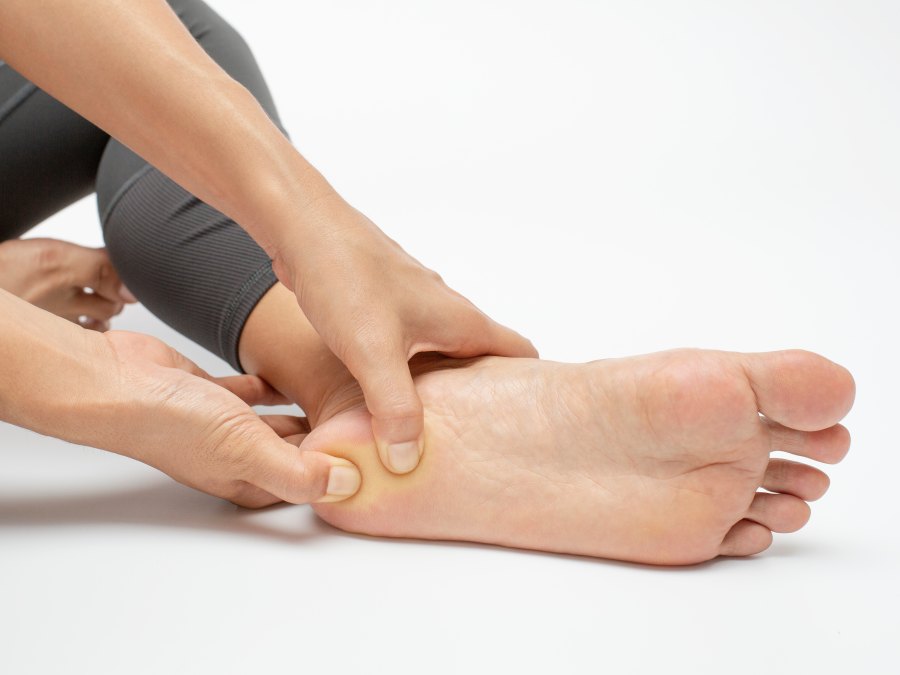
Your plantar fascia is a ligament-like band running from the heel to the forefoot and toes. Plantar fasciitis develops when that band is overstretched or overused, which fuels inflammation and makes using the foot, including simple walking, painful.
Alongside heel pain, plantar fasciitis causes Achilles tendon tightness, arch pain, stiffness, and heel swelling. Symptoms often flare when you first stand up in the morning and after walking. You might also have a dull, fairly constant ache, or a stabbing heel pain. During exercise the pain may ease, only to return once you stop.
Anyone can develop it, but playing sports, working long hours on your feet, exercising on hard surfaces, and wearing unsupportive shoes all increase the risk. So do flat feet and carrying excess body weight.
Treatment, starting conservatively
In many cases, rest, periodic icing, and custom orthotics relieve the symptoms. Over-the-counter pain medication, massage and stretching, and a walking boot can help too.
Embolization is for ongoing or severe symptoms, particularly those that have not improved with those measures.
How the procedure works
Plantar fasciitis embolization places an embolic agent into the affected blood vessels in the plantar fascia. That blocks the abnormal blood flow, reducing pain and inflammation.
It requires only a tiny puncture. Dr. Golowa places a catheter and uses digital imaging to guide it to the target.
The advantages
- Highly effective at reducing pain and inflammation.
- No general anesthesia required.
- Safer and less painful than surgery.
- Quick recovery.
- A meaningful improvement in day-to-day quality of life.
Most people experience less pain within a week of the procedure, and those benefits often last for several years or longer. With sensible changes such as better footwear, many people need no further treatment.
To learn more or find out whether you are a good candidate, call our office at (212) 991-9991 or book an appointment with Dr. Golowa.