By Yosef Golowa, MD, FSIR · Published November 22, 2026 · 6 min read
For women looking at non-surgical fibroid treatment in NYC, uterine fibroid embolization (UFE), also called uterine artery embolization (UAE), is a proven alternative to hysterectomy or myomectomy that keeps the uterus. Roughly 85% to 90% of women have significant or complete relief from heavy bleeding, pelvic pressure and bloating afterward.
Yet one question comes up in almost every consultation about outpatient UFE in New York City: how painful is the recovery?
Cramping in the first 24 hours used to mean intravenous narcotics, spinal anesthesia or an overnight hospital stay. Today, targeted pain techniques such as the superior hypogastric nerve block (SHNB), combined with a planned multimodal medication regimen, let most patients go home the same day and recover comfortably in their own space.
Why does UFE cause cramping?
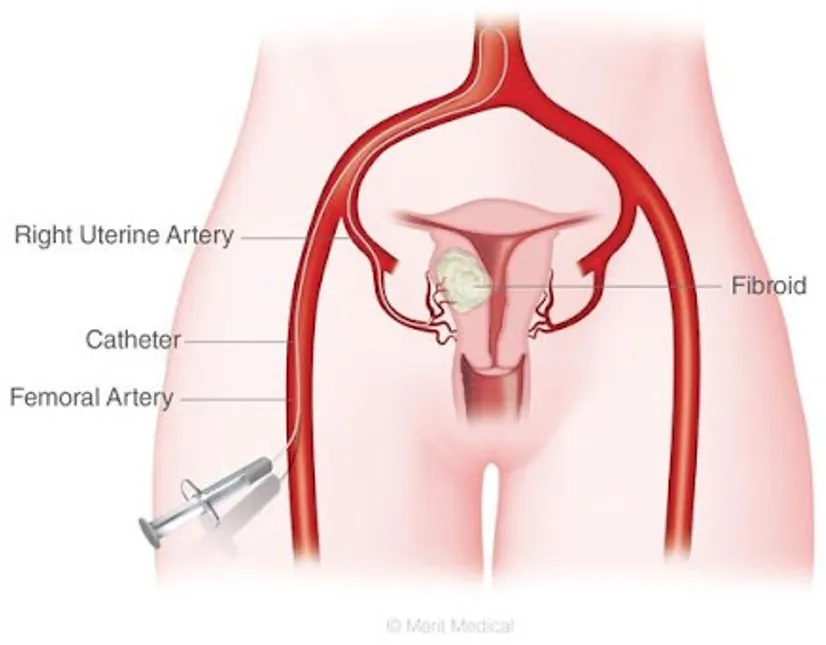
During UFE, an interventional radiologist guides a thin catheter through a pinhole at the wrist or groin into the arteries that feed the fibroids, then releases tiny particles to block their blood flow. As the fibroids lose their blood supply and begin to shrink, the uterus responds with temporary inflammation and cramping. This is a normal part of healing, sometimes called post-embolization syndrome.
Cramping usually peaks in the first 6 to 12 hours and eases noticeably after 24 hours. Most patients are back to desk work and normal routines within 7 to 10 days. Because that early pain window is so predictable, modern UFE pain management aims to block pain signals before they build rather than chase discomfort afterward.
What new 2026 research shows about nerve blocks for UFE
A prospective study published in CVIR Endovascular in August 2026 (da Silva et al.) followed 42 women undergoing UFE for symptomatic fibroids. Patients were assigned in alternating order to one of two early pain-control strategies: a superior hypogastric nerve block (21 patients) or spinal anesthesia (21 patients). All were observed in the hospital for 18 hours.
- Similar early pain control. Pain scores at 1, 6 and 18 hours after UFE were not significantly different between the two groups.
- Identical rescue medication rates. In each group, 13 of 21 patients (61.9%) needed at least one dose of rescue intravenous morphine, and total doses were similar.
- Reliable and safe. The nerve block worked technically in all 21 patients, took a median of 12 minutes to perform, and caused no block-related complications.
- Simpler for patients. Spinal anesthesia required a separate anesthesia team, a bladder catheter for every patient and a period of lower-body numbness, and one patient developed a post-spinal headache. The nerve block was placed by the interventional radiologist under image guidance during the procedure.
- Fibroid size matters. In both groups, larger fibroids were linked to more pain and more need for rescue medication.
The researchers are clear that this was a small exploratory study. It does not prove the two approaches are equivalent, and more than half of patients in both groups still needed some rescue medication. The takeaway is that a nerve block is a safe, practical building block within a broader multimodal pain plan, not a stand-alone solution.
Techniques that make recovery at home possible
Outpatient fibroid centers combine several strategies to keep patients comfortable without an overnight admission:
- Superior hypogastric nerve block. Using imaging guidance during the procedure, the interventional radiologist places local anesthetic next to the nerve bundle that carries pelvic pain signals. This blunts early cramping without the bladder catheter and immobility of spinal anesthesia.
- Medication delivered into the uterine arteries. Studies have shown that giving a local anesthetic such as lidocaine directly into the uterine arteries at the end of embolization can reduce pain in the first hours, without affecting how well the fibroids are treated.
- A planned multimodal medication schedule. Rather than relying on one strong narcotic, modern protocols layer scheduled non-opioid anti-inflammatories, anti-nausea medication and tailored oral rescue options, starting before the procedure and continuing at home.
Together, these let patients move through the peak recovery window comfortably and rest at home the same day.
Our approach to outpatient UFE in Midtown Manhattan
At our Midtown Manhattan office, we perform uterine fibroid embolization as an outpatient procedure. Managing discomfort is an important focus of our practice, and keeping you comfortable before, during and after UFE is built into every step.
We use a superior hypogastric nerve block whenever possible. Dr. Golowa places the block himself under image guidance during your procedure. In our experience, the nerve block greatly helps with pain after the procedure, especially during the first hours when cramping is usually strongest.
The block is one part of a complete plan. Because fibroid size affects how much cramping you can expect, we tailor your pain medications to your MRI findings and medical history. After the procedure, our team monitors you in recovery until your pain is well controlled on oral medication. You go home the same day with a clear, hour-by-hour medication schedule and direct access to our clinical team.
Questions to ask when choosing a UFE center in NYC
Not every hospital or outpatient center in New York uses the same pain protocol. When comparing fibroid specialists, how a center manages post-procedure discomfort matters as much as the physician's technical experience. Ask:
- What targeted pain techniques do you use during the procedure? For example, an image-guided superior hypogastric nerve block or medication given into the uterine arteries.
- Do you follow a structured multimodal pain protocol? Combining regional techniques with scheduled anti-inflammatories, anti-nausea medication and appropriate rescue medication generally gives steadier relief than opioids alone.
- Is the facility set up for safe same-day discharge? Ask how long you will be observed and what comfort benchmarks you need to meet before going home.
- What support do you provide at home? Look for a written medication schedule, direct phone access to the care team, and clear instructions on when to call, such as a persistent high fever, severe pain not relieved by your medication, or heavy bleeding.
Frequently asked questions about UFE in NYC
- What is the difference between UFE and UAE?
- They are the same minimally invasive procedure. "UAE" (uterine artery embolization) describes blocking blood flow in the uterine arteries; "UFE" (uterine fibroid embolization) refers to using that technique to treat fibroids.
- How painful is UFE?
- Most women feel moderate cramping that peaks in the first 6 to 12 hours and eases after a day. With a nerve block, medication into the uterine arteries and a scheduled multimodal medication plan, most patients are comfortable enough to recover at home the same day.
- How long is recovery after outpatient UFE?
- Most women go home the same day, rest at home for the first 3 to 4 days, and return to desk work and normal activities within 7 to 10 days. Recovery after myomectomy or hysterectomy usually takes 4 to 8 weeks.
- Why do I need an MRI before UFE?
- Ultrasound confirms that fibroids are present, but a pelvic MRI maps their exact size, number, location and blood supply, and checks for related conditions such as adenomyosis. Your interventional radiologist uses the MRI to plan both the embolization and your pain control.
- Does insurance cover UFE in New York?
- Most major commercial plans and Medicare cover UFE when fibroids cause documented symptoms such as heavy menstrual bleeding, anemia, pelvic pressure or urinary frequency. Our office helps verify your benefits and handles prior authorization before the procedure.
Exploring non-surgical fibroid options in New York City?
Heavy bleeding, pelvic pressure and fatigue from fibroids should not run your life, and fear of a painful hospital stay should not stop you from exploring treatment that keeps your uterus. With image-guided pain control and a dedicated outpatient team, UFE offers an effective path forward with a comfortable recovery at home. To compare your options, see UFE or hysterectomy? How the options compare and what to expect during UFE.
To find out whether outpatient UFE is right for you, call our office at (212) 991-9991 or book an appointment. We will review your imaging, compare your treatment options and walk you through your pain control plan, including the nerve block, step by step.
Study referenced