
GAE for Knee Pain: Is This Nonsurgical Treatment Right for You?
Chronic knee pain doesn’t have to mean either misery or surgery. Learn whether minimally invasive genicular artery embolization (GAE) is right for you.
Read the articleHome / Patient resources / Article
If you have painful knee arthritis that won’t let up, genicular artery embolization (GAE) has a lot to offer. Learn how to make the most of this minimally invasive treatment.
Over 30 million adults in the United States live with osteoarthritis (OA), making it the most common form of arthritis. If you have it, there’s a good chance your knees are affected.
Numerous treatments can help ease your OA symptoms, thankfully, including genicular artery embolization (GAE). You may be a good candidate for GAE if you’re 40-80 years old and experience severe knee pain that hasn’t responded well to conservative treatments.
At his Midtown Manhattan, practice, double board-certified radiologist Dr. Yosef Golowa provides GAE as a minimally invasive way to restore your comfort and mobility. Learn more about genicular artery embolization.
Knee OA damages the joint and surrounding tissues as a result of “wear-and-tear” or an injury. While diagnoses are especially common between ages 55 and 64, more than half of people who develop OA symptoms are younger than 65.
Once knee osteoarthritis sets in, your symptoms may include:
Depending on factors like the severity of your symptoms, OA treatment may include oral or injected medications, physical therapy, a minimally invasive procedure, or surgery.
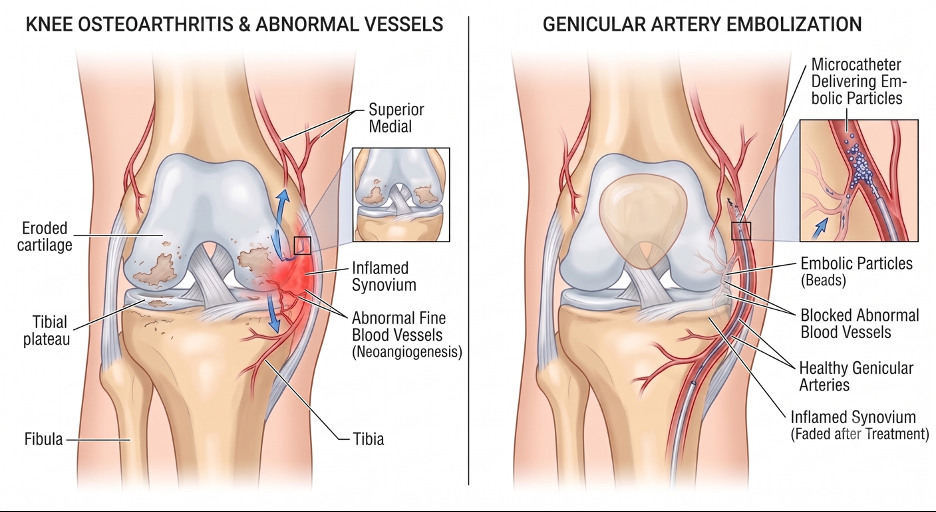
Genicular artery embolization provides lasting relief from osteoarthritis, without the hassle or risks of invasive surgery. During the procedure, Dr. Golowa places a catheter in an artery in your thigh. Then, guiding with X-ray images, he moves the tube along the artery that sends blood to your knee’s lining. He then injects gel particles into the artery, which limit blood flow to problematic tissues.
As an outpatient procedure, GAE only requires twilight sedation and about an hour of your time. Individual results vary, but we find that most people notice less knee pain within two weeks.
To maximize your results from GAE, make sure you follow our instructions. If you currently smoke, quitting that habit can help ensure the best outcome. You’ll also need to be infection-free at the time of the procedure, so measures like staying away from sick individuals and maintaining positive handwashing and sleep habits may help, too.
Dr. Golowa will go over your aftercare instructions, such as temporarily avoiding high-impact exercise. You can likely return to most other daily activities within a few days.
To learn more about geniculate artery embolization or get started with the knee arthritis care you need, call our office or book an appointment with Dr. Golowa through our website today.
Chronic knee pain doesn’t have to mean either misery or surgery. Learn whether minimally invasive genicular artery embolization (GAE) is right for you.
Read the articleChronic knee pain can keep you from going about your daily life with ease. Here are five common causes, plus a minimally invasive treatment that works.
Read the article